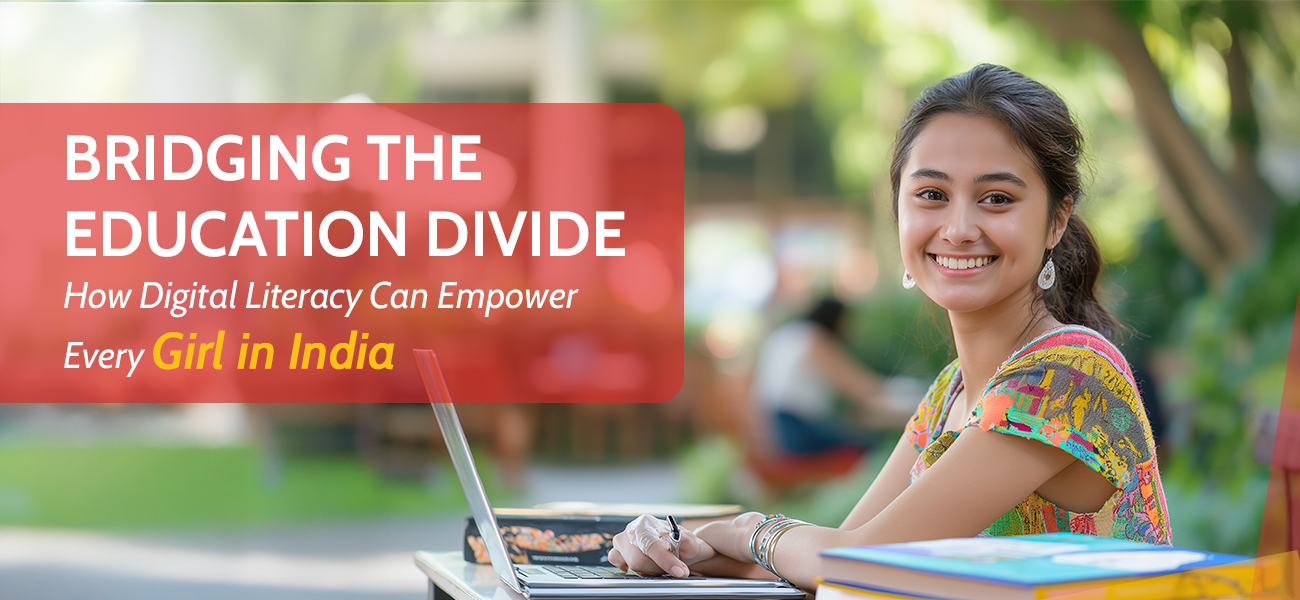
Seventeen-year-old Anjali wasn’t sure what would happen when she first used a tablet. But once the screen turned on, her classroom felt bigger, and her world opened up. She could now find science lessons, coding guides, and stories from women engineers, all in her language. For the first time, Anjali felt connected to new opportunities.
Thousands of girls in India are as curious, intelligent, and ambitious as Anjali, but they face a significant challenge: learning digital skills. The problem isn’t just about owning a phone or having Wi-Fi. It’s about knowing how to use these tools. For many girls, especially in rural areas, technology can open doors to knowledge, creativity, and confidence.
Digital Gender Gap in India: Addressing Inequality in Access to Technology and Education
India has made big progress in digital inclusion over the past decade, but a major gender gap remains. National surveys show that women and girls are less likely to own smartphones or use the internet, and social norms often limit their online activity. Limited access can lead to missed opportunities throughout life. While some can easily use apps and explore career options online, many girls still have to wait for their turn to use a shared phone. This creates a quiet barrier that holds them back, silencing their voices in school, at work, and in society.
Digital literacy is more than typing or browsing. It helps people find information, question what they hear, and make changes. Without these skills, half the population could be left out of today’s world.
Why Digital Literacy is Crucial for Girls’ Empowerment in India
A girl who is digitally literate becomes a stronger learner. She can take online courses, join government programs, apply for scholarships, or even start a small business from home. She can join international discussions, learn about her rights, and help her community grow.
Indicatively, programs in certain regions of India demonstrate that when girls are taught to use digital tools, fewer girls drop out, their self-esteem increases, and families begin to view education differently. The parents observe actual changes: a daughter can make online payments, translate information, or assist younger students with their learning.
Digital learning helps girls compete in cities and gives them more independence in rural areas. For young women, it turns learning into a journey of discovery.
Digital Literacy’s Impact on Girls’ Lives: The Human Side of Technology
However, serious transformation begins with attitude, not merely with the availability of gadgets. Since ancient times, female education in India has been considered a privilege. Digital literacy can now help make it a right. As soon as a girl is taught how to search, create, or code, she becomes her own teacher.
This empowerment spreads to her siblings, friends, and the whole community. In villages where girls learn digital skills, they often help other girls sign up for programs, find health information, or apply for exams.
Digital literacy is more than a skill; it opens new opportunities. It teaches girls and prepares them to become leaders.
Envisioning a Digitally Empowered Future for Indian Girls
The next decade will show whether India’s growth will benefit everyone. Technology will shape education, jobs, healthcare, and government. If girls and women are not ready for this digital world, they risk missing out on a future they deserve to help build.
India needs more than just devices; it needs more mentors. It needs more than internet access; it needs confidence. Digital literacy programs should go beyond basic training and become long-term efforts that encourage curiosity, innovation, and critical thinking.
SivaShiksha: Empowering Indian Girls Through Digital Learning Programs
At SivaShiksha, education works best when everyone is included. Every girl, no matter her background, should have access to the tools that shape her future. Our programs teach digital literacy as a life skill and combine technology education with storytelling, speaking skills, and self-leadership.
Through community workshops, mentoring, and blended learning, SivaShiksha can transform young women into active technology consumers to be digital creators. It could be designing presentations, starting a small online business, or learning a new language online. Regardless of the path the learner takes, our approach will ensure they develop both skills and confidence.
We imagine an India where no girl is left behind just because she cannot click, connect, or code. When all girls are empowered through digital learning, they not only change their own futures but also the story of their communities.