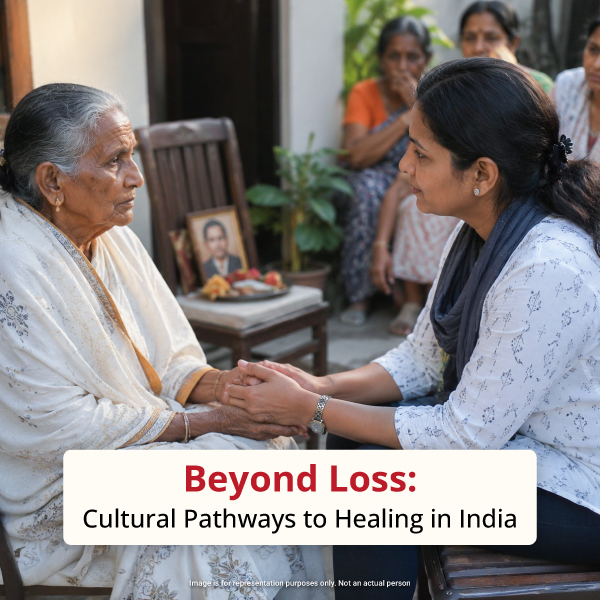
Everyone experiences grief and loss, but how people understand and cope with them depends a lot on their culture. In India, family and community ties are very important, so loss is almost never faced alone. Whether it is losing a loved one, moving far from home, losing health, or letting go of a dream, these changes can disrupt daily life and leave a feeling of emptiness that is both personal and shared. In this context, grief is more than just a private feeling; it is closely connected to rituals, traditions, and shared memories.
In Indian families, grief is passed down through generations and can change daily routines and traditions. Family and community support can be comforting, but it may also come with unspoken expectations to stay strong or hide personal pain. The stories people hear about grief can help them be resilient, but they might also make it difficult to show vulnerability. Since people often put the group’s needs before their own feelings, they may carry hidden burdens and feel pressured to grieve in ways that align with cultural expectations rather than what they truly need.
Some types of grief are not seen or talked about openly. For example, young adults leaving home, parents feeling sad about dreams that did not come true for their children, or people losing their sense of self because of illness or retirement often go through grief without any ceremony or ritual. These quiet losses can hurt deeply, especially as society changes and old ways of expressing grief become less common. It is important to recognize these silent forms of grief and remember that healing takes time and looks different for everyone.
SivaShiksha helps support emotional wellbeing in these situations. It creates safe places for people to talk and connect with others, respecting the cultural ways people experience grief and encouraging healing together. By offering creative activities, hands-on learning, and inclusive programs, SivaShiksha helps individuals and families cope with loss with kindness and strength, building a future where healing grows through connection and understanding.
Learn More: How Indian Communities Support the Healing Journey