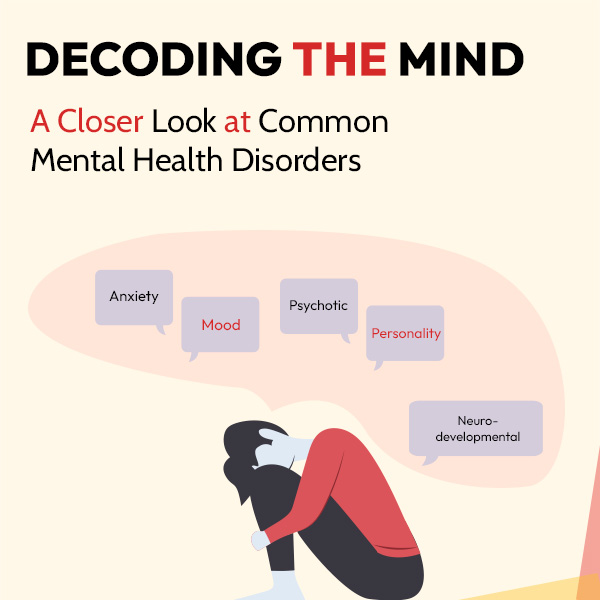
Mental health has become one of the most important conversations of our time. Yet, for many, the world of mental health disorders remains confusing and misunderstood. Knowing the different types of disorders not only helps us recognize symptoms early but also builds empathy for those living with them.
Anxiety Disorders
Everyone feels anxious at times, but anxiety disorders take those feelings to another level. They involve chronic worry, fear, or panic that interferes with everyday life. Generalized Anxiety Disorder (GAD) causes persistent anxiety about routine situations, while Panic Disorder brings sudden episodes of intense fear. Phobias are linked to specific triggers like flying or heights and Social Anxiety Disorder revolves around fear of being judged in social settings. With therapy and coping strategies, anxiety disorders are highly manageable.
Mood Disorders
Mood disorders affect a person’s emotional balance and energy levels. Depression leads to ongoing sadness, fatigue, and loss of interest in daily life. Bipolar Disorder, on the other hand, causes extreme mood swings from depressive lows to manic highs. These conditions are not signs of weakness but medical challenges that can be managed effectively with therapy, medication, and support systems.
Psychotic and Personality Disorders
Psychotic disorders, such as Schizophrenia, affect perception and thinking, often involving hallucinations or delusions. People with such conditions may struggle to distinguish between reality and imagination, but with treatment, many lead stable lives.
Personality disorders involve long-standing patterns of behavior that affect relationships and self-image. Borderline Personality Disorder (BPD) leads to emotional instability and fear of abandonment, while Narcissistic Personality Disorder (NPD) involves a need for admiration and sensitivity to criticism. Understanding these patterns helps reduce judgment and increase compassion.
Eating and Neurodevelopmental Disorders
Eating disorders including Anorexia, Bulimia, and Binge-Eating Disorder revolve around food, control, and self-worth. They often co-occur with anxiety or depression and need both psychological and medical care.
Neurodevelopmental disorders, such as Autism Spectrum Disorder (ASD) and ADHD, affect learning, behavior, and communication. Early diagnosis and support can make a transformative difference.
The Path Forward
Understanding mental health disorders begins with listening, learning, and empathy. When we replace stigma with awareness and compassion, we make it easier for people to seek help and remind them they’re not alone in their struggle.