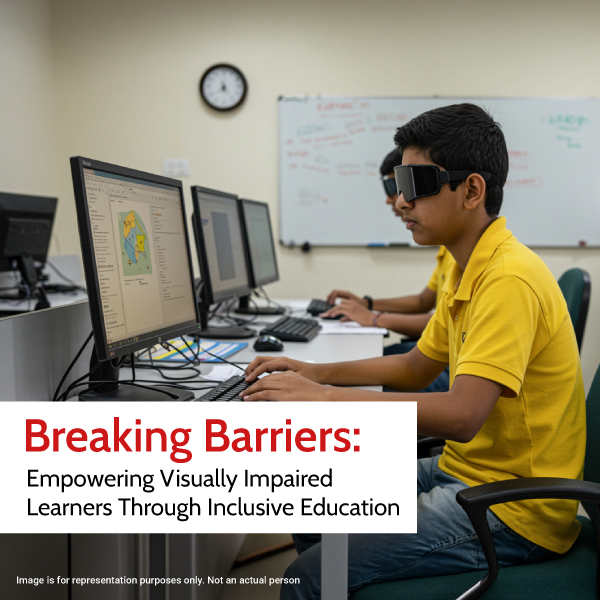
Inclusive education is crucial for removing the barriers that keep visually impaired students from reaching their full potential. In India, many classrooms rely primarily on textbooks, diagrams, and blackboard work, making learning difficult for students who are blind. As a result, many blind and visually impaired students feel left out because their needs are not considered in regular classrooms. The main problem is not the students’ abilities, but the lack of accessible materials, limited teacher training, and not enough use of assistive technologies.
Still, the biggest challenge is accessibility, not ability. When schools focus mainly on sighted students, they unintentionally leave out those who experience the world in other ways. Without options such as Braille, audio, or tactile learning tools, blind students have trouble accessing the same information, joining classroom activities, and connecting with classmates. To fix this, schools need to adopt universal design so that resources and teaching methods meet the needs of all learners.
Assistive technologies like screen readers, tactile diagrams, and voice-enabled devices help visually impaired students become more independent. These tools not only support learning but also let students use digital textbooks, understand complex ideas through touch, and work together on projects. When schools use these technologies and inclusive teaching methods, they create fair and supportive environments where all students are encouraged to succeed.
SivaShiksha is at the forefront of driving change in this space. Through community outreach, awareness campaigns, and advocacy for accessible education, SivaShiksha empowers visually impaired learners and their families. The organization provides digital literacy training, promotes the use of adaptive learning tools, and strengthens local support networks. By championing inclusive education, SivaShiksha ensures that visually impaired students are recognized for their abilities rather than their limitations. Their efforts help create learning environments where all students, regardless of their abilities, can thrive with dignity and confidence.