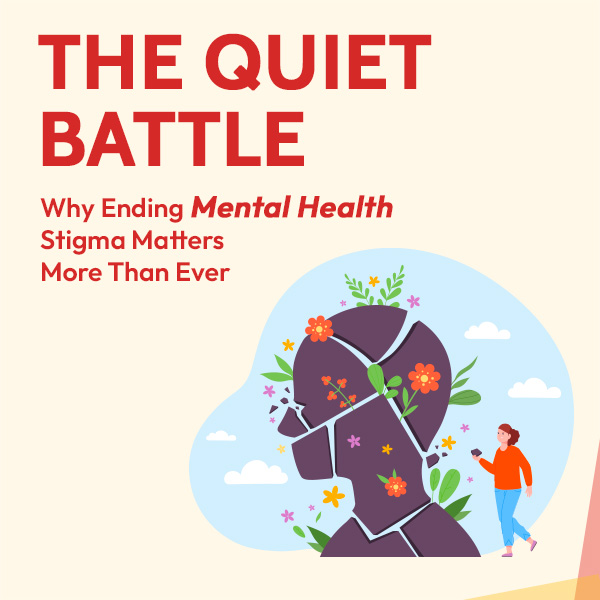
Today, people talk about mental health more often, but stigma remains and can be hard to see. Many hide their struggles behind smiles because they fear being judged, rejected, or misunderstood. Stigma does more than keep people quiet; it isolates them, slows their recovery, and sometimes even puts lives at risk.
The Weight of Stigma
Misunderstandings help mental health stigma grow. Some people still believe mental illness means someone is weak or lacks willpower. These outdated ideas prevent people from accessing the help they need and contribute to further suffering.
Stigma can manifest in subtle ways, such as a dismissive comment, a lack of empathy, or the perception that therapy is only for “serious cases.” Each time this happens, it sends the message that mental health problems should be kept secret.
This silence has consequences. According to mental health studies worldwide, most individuals wait months or even years before seeking help, often when their condition has already worsened. Anxiety, depression, or trauma left untreated can affect every aspect of life, be it work, relationships, or physical health.
Changing the Conversation
To break the cycle, we must begin to make a change; we need to talk about mental health differently. Open conversations at home, at work, and in the community help people see that everyone faces challenges at times.
Education is important. When people learn that mental illnesses are medical conditions affected by genetics, biology, and environment, they are more likely to respond with understanding instead of judgment.
Positive and realistic portrayals of mental health challenges can reshape public opinion and encourage acceptance. When influential voices, such as artists, leaders, or public figures, share their own experiences, they help create a sense of belonging for those who might otherwise feel isolated.
Building a Culture of Compassion
Ending stigma begins with small acts of understanding. Listening without judgment, offering support without pity, and refraining from using labels can help people feel safe in sharing their experiences.
Workplaces can offer wellness programs, schools can teach about mental health, and communities can run awareness campaigns to highlight the importance of care and connection.
Ultimately, breaking the stigma means recognizing our shared humanity. Mental health affects everyone, either directly or indirectly. The more we talk, listen, and care, the closer we get to a world where asking for help is viewed as a sign of strength, not something to be ashamed of.