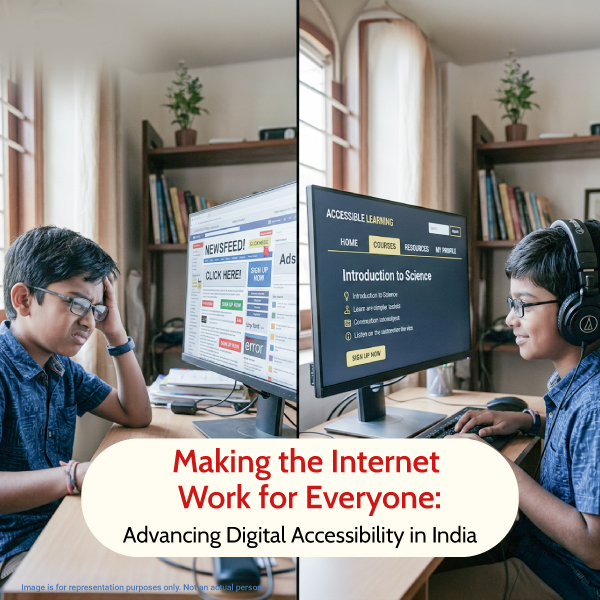
The Internet has transformed life in India, providing access to education, employment, and communication for millions. However, many people with disabilities still face significant barriers. Inaccessible websites, videos without captions, and interfaces that do not support assistive technology can prevent full participation in the digital world. These challenges exclude users and restrict access to essential information and services.
Despite India’s rapid digital growth, much of the online infrastructure assumes users can see, hear, and navigate easily. This excludes individuals with visual, hearing, physical, or cognitive impairments. Digital accessibility requires designing online environments usable by everyone, regardless of ability. Simple steps such as adding alternative text to images, ensuring proper color contrast, and enabling keyboard navigation can significantly impact accessibility. These features benefit not only people with disabilities but also improve usability for all, including those in noisy settings or with limited technical skills.
Inclusive design must be a core principle as India expands its digital presence. With the growth of online education, government services, and remote work, it is essential to ensure these advances do not widen the gap for people with disabilities. Accessibility is not only a technical concern but also a matter of rights and empowerment, enabling individuals to live independently and participate fully in society. Prioritizing accessibility from the outset allows digital platforms to serve as bridges rather than barriers.
SivaShiksha plays a vital role in advancing digital accessibility in India. Through awareness campaigns, educational outreach, and community engagement, the organization promotes equal access to technology. SivaShiksha empowers communities to value inclusive digital spaces and advocates for designs that address diverse needs. By fostering understanding and action, SivaShiksha helps build a future where the internet serves everyone.
Learn More: Digital Accessibility in India: Why the Internet Must Work for Everyone