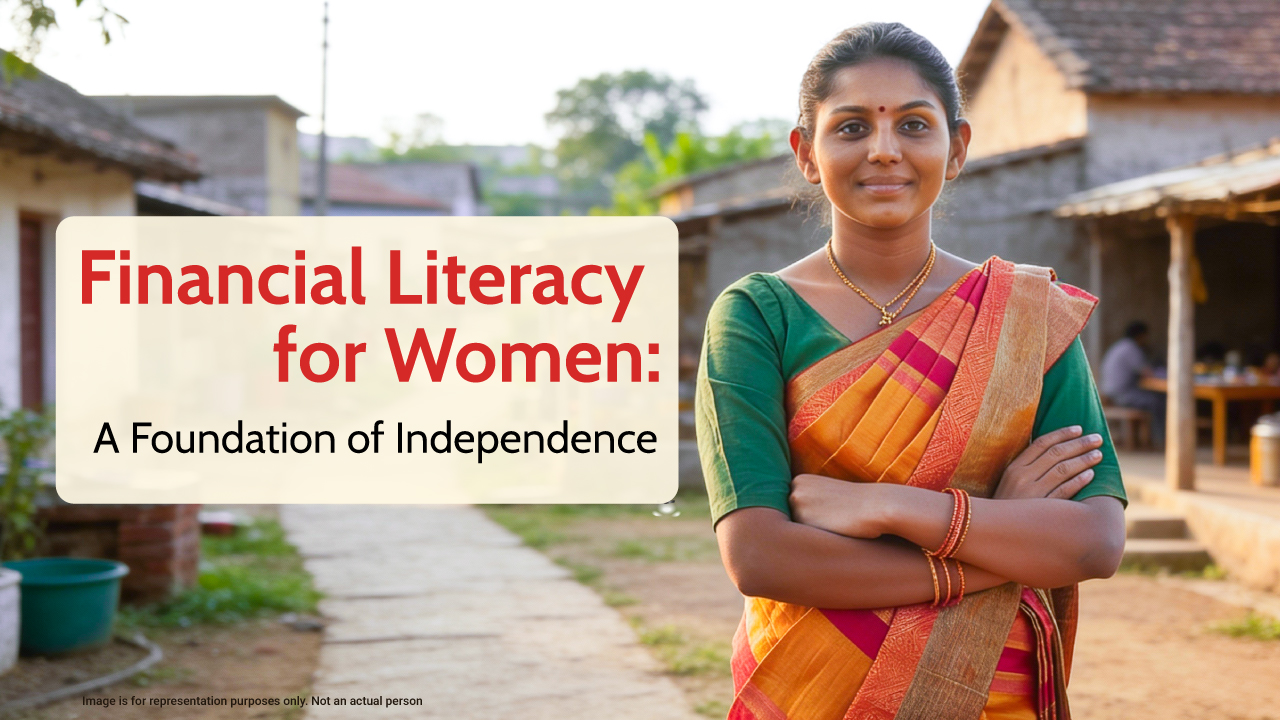
When 23-year-old Kavita earned her first paycheck, she did not even know how to proceed. She was always raised in a family where saving money was considered a man's mandate. This time around, however, she would learn how to budget, invest, and plan towards the future. She began with a notebook, a few online videos, and a workshop, which changed her perception of money. She understood that money was not something to fear, but something she could learn to control.
There are numerous other women across India, like Kavita, who are assuming new roles in work, education, and business. Nevertheless, they are often still excluded from financial decision-making, either by tradition, limited exposure, or ignorance. Although women have demonstrated their ability to excel in any sector, financial literacy continues to leave most of them partially dependent.
The High Cost of Financial Illiteracy for Women
Financial illiteracy is not merely ignorance of how to manage money; it is the loss of control over one's decisions. Most women earn wages but fail to determine how they are used or saved. In many homes, other people make major financial decisions, such as property investments or insurance. Without women, families and communities lose access to better, more balanced decision-making.
According to a 2023 study, fewer than one in three Indian women are confident in their ability to perform basic financial activities, including budgeting and comparing loans. The issue is even more pronounced in rural regions, where access to banks, mobile apps, and digital tools is limited. The entire argument is simple: with money, women acquire power.
Why Financial Literacy is Crucial for Women’s Empowerment
Financial literacy is not only enlightening but also empowering to women. A woman with strong financial knowledge can secure her future, live with her family, and address problems with confidence. She turns out to be a decision-maker and not a spectator.
The entire community benefits when women have financial power. As individuals become more savings-oriented, children's education takes precedence, and local economies strengthen. Studies indicate that women spend up to 90 percent of their income on their families and communities. Imagine how things would be different if all women in India had the means to manage their finances effectively.
Financial literacy not only creates self-worth but also income. It demonstrates that young women can dream of owning land, starting a business, or investing in their education without anyone's permission. It leads to confidence in decision-making and long-term financial planning.
Bridging the Financial Knowledge Gap for Women
Although awareness of the issue is increasing, challenges remain. Even in many families, discussing money is not considered feminine. Girls are taught to save rather than invest or grow wealth. Personal finance is not taught in most schools, and women in informal jobs rarely receive structured training.
Online platforms have created new opportunities, but without guidance, they can be overwhelming. Financial education must be practical, relatable, and accessible. It should include understanding banking systems, risk assessment, contracts, and long-term planning. Most importantly, it should begin early—at home, in schools, and within communities.
Turning Financial Literacy Awareness into Action for Women
Real change begins when financial literacy becomes a shared goal. Workplaces can offer financial workshops for women. Communities can create savings and investment groups. Families can include daughters in financial conversations just as they do sons.
Women who manage their finances are better equipped to handle emergencies, start businesses, and build secure futures. Financial education is not just knowledge—it creates real opportunities.
How SivaShiksha Empowers Women Through Financial Literacy Education
At SivaShiksha, empowerment is about integrating education with opportunity. Financial literacy builds confidence, independence, and decision-making ability. Our programs help women learn budgeting, saving, investing, and financial planning.
We take a practical approach by combining education with real-life application. Through storytelling, peer learning, and digital literacy integration, participants learn by doing. Activities include simulations, role-playing, and real-world problem-solving such as managing loans and business finances.
We also collaborate with banks, cooperatives, and self-help groups to make financial systems more accessible. When women gain financial knowledge, they build stability not just for themselves but for their families and communities. Financial awareness transforms into independence, strength, and dignity.